


One Vision, Many Needs: Understanding Different Specialities Under One Roof
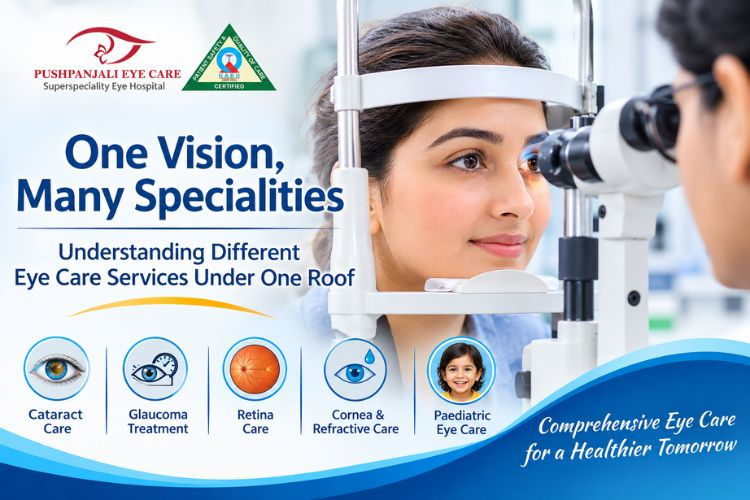
Comprehensive eye care brings different ophthalmic specialities, diagnostic facilities and treatment approaches together to address a wide range of vision problems. At Pushpanjali Eye Care, patients can explore specialised care for conditions affecting the cornea, lens, retina, optic nerve and other parts of the eye. This coordinated approach helps people understand their eye health and make informed treatment decisions.
Choosing an eye care hospital Kolkata is not simply about finding a place for an eye check-up. It is about accessing appropriate expertise when different symptoms require different kinds of attention. A person experiencing blurred vision may need a completely different evaluation from someone dealing with persistent eye pressure or flashes of light.
What Does Comprehensive Eye Care Under One Roof Mean?
Comprehensive eye care means having access to different eye care specialities and diagnostic services within a coordinated healthcare setting. Rather than treating every vision complaint as the same problem, specialists evaluate the particular structures and functions of the eye that may be affected.
Think of the eye as a complex system. The cornea helps focus incoming light, the lens adjusts focus, the retina receives visual information, and the optic nerve carries signals to the brain. A problem in any one of these areas can affect vision, but the diagnosis and treatment may be very different.
This is why specialised consultations matter. They help patients receive attention based on the actual cause of their symptoms rather than relying on a one-size-fits-all approach.
Which Eye Care Specialities Should Patients Know About?
Different ophthalmic specialities focus on different parts of the eye. Understanding their roles can help patients recognise which type of professional evaluation may be appropriate.
1. Cataract Care: When the Natural Lens Becomes Cloudy
A cataract develops when the natural lens inside the eye becomes cloudy. People often describe their vision as looking through a foggy window. Colours may appear less vibrant, reading may become difficult, and driving at night can feel uncomfortable because of glare.
Cataract specialists assess the extent of lens clouding, its impact on everyday activities and whether surgery is appropriate. When surgery is recommended, the doctor discusses suitable intraocular lens options and explains the procedure, expected recovery and follow-up requirements.
2. Glaucoma Care: Protecting the Optic Nerve
Glaucoma is a group of eye conditions that damage the optic nerve. Elevated eye pressure is an important risk factor, although glaucoma can also develop when eye pressure falls within the statistically normal range.
One challenge is that glaucoma often develops without noticeable symptoms during its early stages. People may not realise that their peripheral vision is gradually changing.
Consulting a glaucoma specialist in Kolkata can help patients receive appropriate assessment, pressure monitoring and treatment guidance. Depending on the condition, management may involve prescribed eye drops, laser procedures or surgery.
3. Retina Care: Looking Beyond the Front of the Eye
The retina is a light-sensitive layer at the back of the eye that plays an essential role in vision. Conditions such as diabetic retinopathy, retinal detachment and age-related macular degeneration can affect this delicate structure.
Retinal problems deserve particular attention because some may progress without obvious discomfort. People with diabetes, for example, may develop retinal changes even when their eyesight initially seems normal.
Specialised retinal evaluation may involve a dilated eye examination, retinal imaging or other diagnostic investigations. Patients seeking a best retina specialist in Kolkata should look for appropriate expertise in diagnosing and managing these conditions.
4. Cornea and Refractive Care: Improving the Way the Eye Focuses
The cornea is the transparent front surface of the eye. Its shape and clarity influence how light enters and focuses inside the eye. Conditions affecting the cornea can cause blurred vision, discomfort and sensitivity to light.
Refractive care, meanwhile, focuses on vision errors such as myopia, hyperopia and astigmatism. Depending on an individual's eye health and suitability, treatment options may include spectacles, contact lenses or laser vision correction procedures such as LASIK.
5. Paediatric Eye Care: Supporting Vision from Childhood
Children may not always recognise or communicate that they have a vision problem. Difficulty reading the classroom board, frequent eye rubbing, squinting or sitting unusually close to a screen can sometimes indicate an underlying issue.
Paediatric eye assessments help identify refractive errors, squint, amblyopia (lazy eye) and other childhood eye conditions. Early identification is especially important because some visual development problems respond better to treatment during childhood.
How Does Coordinated Eye Care Help Patients?
Different specialities are valuable individually, but their coordination can make the patient experience more organised. Consider someone with diabetes who visits an ophthalmologist because of blurred vision. The initial examination may reveal a need for a detailed retinal assessment rather than simply changing the spectacle prescription.
In such situations, access to relevant diagnostic services and specialist opinions can help avoid unnecessary delays in understanding the problem.
Some practical advantages include:
Better diagnostic direction: Symptoms can be evaluated according to the eye structures involved.
Relevant specialist consultation: Patients can be directed towards the appropriate ophthalmic expertise.
More informed decisions: Doctors can explain available treatment approaches and their suitability.
Continuity of care: Follow-up examinations help monitor changes and assess treatment response.
Convenience: Coordinated services may reduce the need to visit multiple unrelated facilities.
How to Choose the Right Eye Care Speciality
Not every eye problem requires the same specialist. The most useful first step is to understand your symptoms and arrange an appropriate examination.
Here is a simple way to approach the process:
Identify the concern: Notice whether you have blurred vision, eye pain, redness, flashes, floaters or difficulty seeing at night.
Arrange an eye examination: A comprehensive assessment helps identify possible causes rather than relying on symptoms alone.
Understand the diagnosis: Ask your doctor which part of the eye is affected and whether further investigations are needed.
Consult the relevant specialist: Depending on the findings, you may need cataract, glaucoma, retina, cornea or paediatric eye care.
Discuss treatment and follow-up: Understand the benefits, limitations, possible risks and monitoring requirements of the recommended approach.
One important point: sudden vision loss, a sudden increase in flashes or floaters, a curtain-like shadow across your vision, or severe eye pain with blurred vision requires urgent medical evaluation. Do not wait for a routine appointment if these symptoms occur.
Why Regular Eye Examinations Matter Even Without Symptoms
Many people visit an eye doctor only when their vision becomes noticeably uncomfortable. However, some eye conditions can develop gradually without causing early warning signs.
Regular examinations are particularly important for people with diabetes, high blood pressure, a family history of glaucoma, previous eye injuries or age-related vision concerns.
An eye examination may include visual acuity testing, refraction, eye pressure measurement and examination of the internal structures of the eye. Additional investigations are recommended when the findings or medical history indicate a need.
It is worth remembering that a normal spectacle prescription does not necessarily mean every part of the eye is healthy. Vision correction and eye disease screening serve different purposes.
Choosing a Reliable Eye Care Destination in Kolkata
When selecting an eye hospital, patients should look beyond convenience and consider the quality of evaluation, availability of relevant specialities, diagnostic support and clarity of communication.
Pushpanjali Eye Care is an eye care destination in Kolkata where patients can explore consultations and specialised services for different eye health concerns. Its approach to eye care focuses on professional evaluation, appropriate treatment guidance and helping patients understand their individual vision needs.
Before choosing any facility, consider whether it can address your particular condition, explain the available treatment options and provide a suitable follow-up plan. These details often matter more than simply choosing the nearest clinic.
Frequently Asked Questions (FAQs)
Q. What is meant by comprehensive eye care?
A. Comprehensive eye care involves evaluating different aspects of eye health, including vision, eye pressure, the retina, cornea and optic nerve. It may include routine examinations, specialist consultations and diagnostic investigations.
Q. Why does an eye hospital need different specialists?
A. Different eye conditions affect different structures. Cataracts involve the natural lens, glaucoma affects the optic nerve, and retinal diseases affect the back of the eye. Specialised expertise helps ensure appropriate diagnosis and treatment.
Q. How often should I get my eyes checked?
A. The recommended frequency depends on age, existing eye conditions, family history and general health. People with diabetes or glaucoma risk factors may need more frequent examinations as advised by their ophthalmologist.
Q. Can one eye examination detect every eye disease?
A. No. A routine examination can identify many concerns, but certain conditions require additional investigations, specialised imaging or a detailed examination by an appropriate specialist.
Q. Should I visit an eye specialist even if I have clear vision?
A. Yes. Some conditions, including early glaucoma and diabetic retinopathy, may develop without noticeable changes in central vision. Regular examinations can help identify problems before significant vision loss occurs.
Conclusion:
Healthy vision depends on understanding more than just whether you can see clearly. Different eye conditions require different expertise, diagnostic approaches and treatment decisions. Having access to coordinated eye care can make this journey easier to understand and manage.
At Pushpanjali Eye Care, patients can take an informed approach to their vision needs by seeking appropriate consultations, understanding their diagnosis and following professional medical advice. Sometimes, the most important step towards protecting your eyesight is simply knowing which specialist to consult.
Blog Development Credit
This article was crafted using insights from advanced AI research platforms such as ChatGPT and Google Gemini to ensure up-to-date industry knowledge and valuable perspectives. The content strategy, optimization, and final publishing were managed by Pushpanjali Eye Care.
Comments